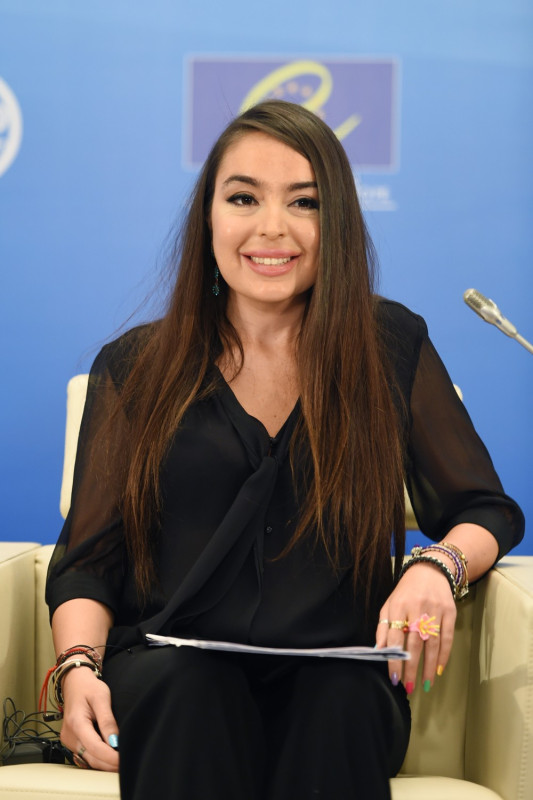
Leyla Aliyeva: Intercultural dialogue must always be promoted for food security and a sustainable society

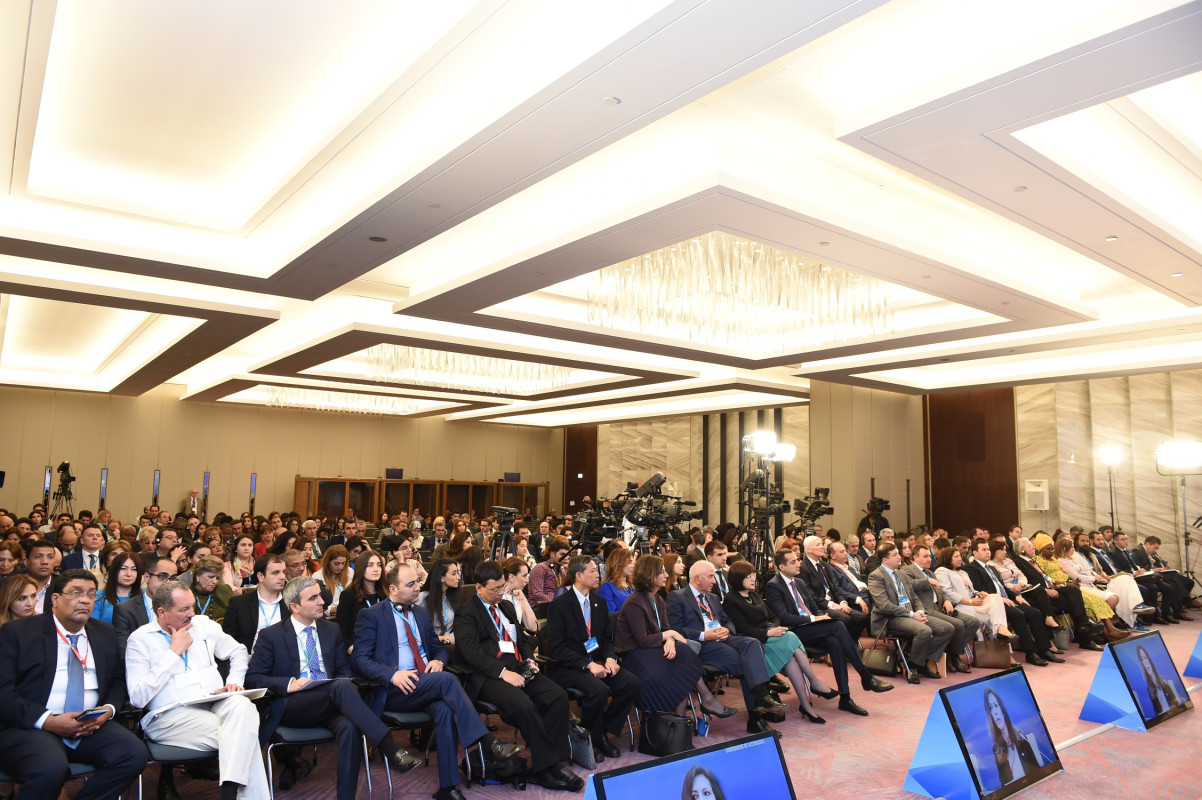
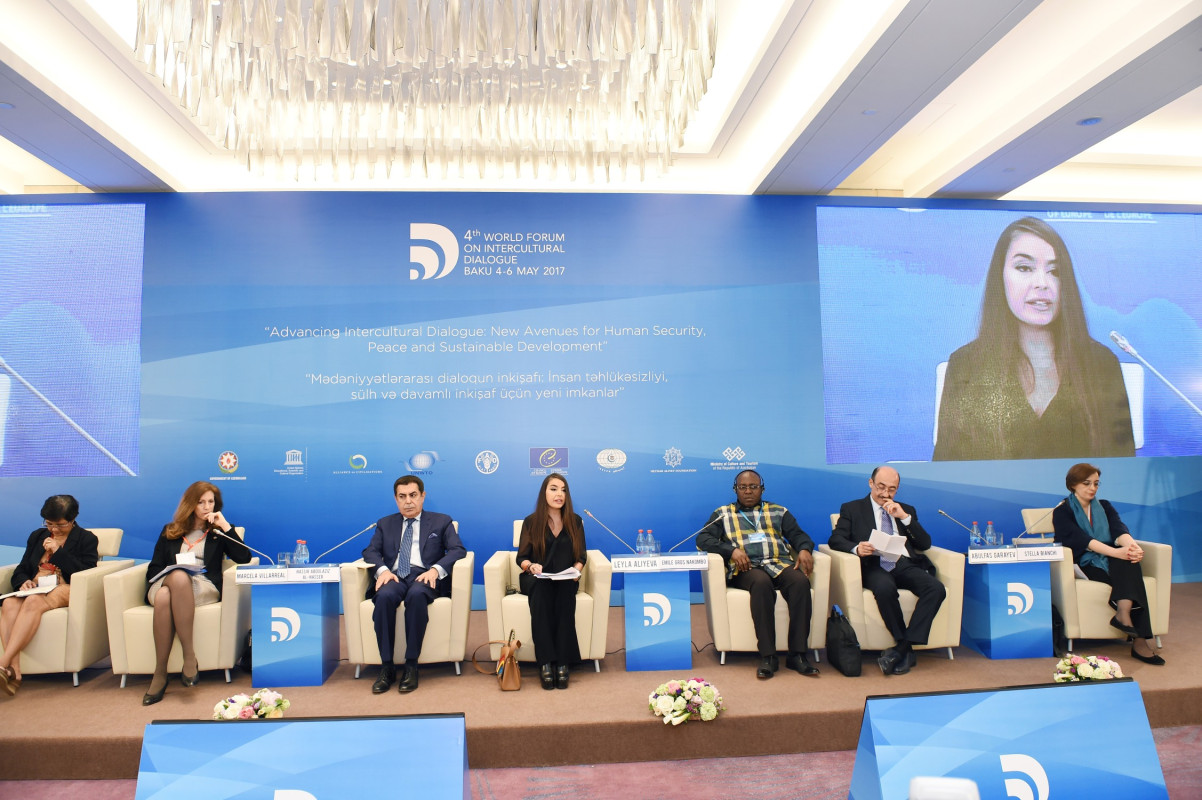
On May 6, within the framework of the IV World Intercultural Dialogue Forum, the second plenary session on "Intercultural Dialogue for Food Security and Sustainable Society: Key Elements for Ensuring Sustainable Development and Peace" was held.
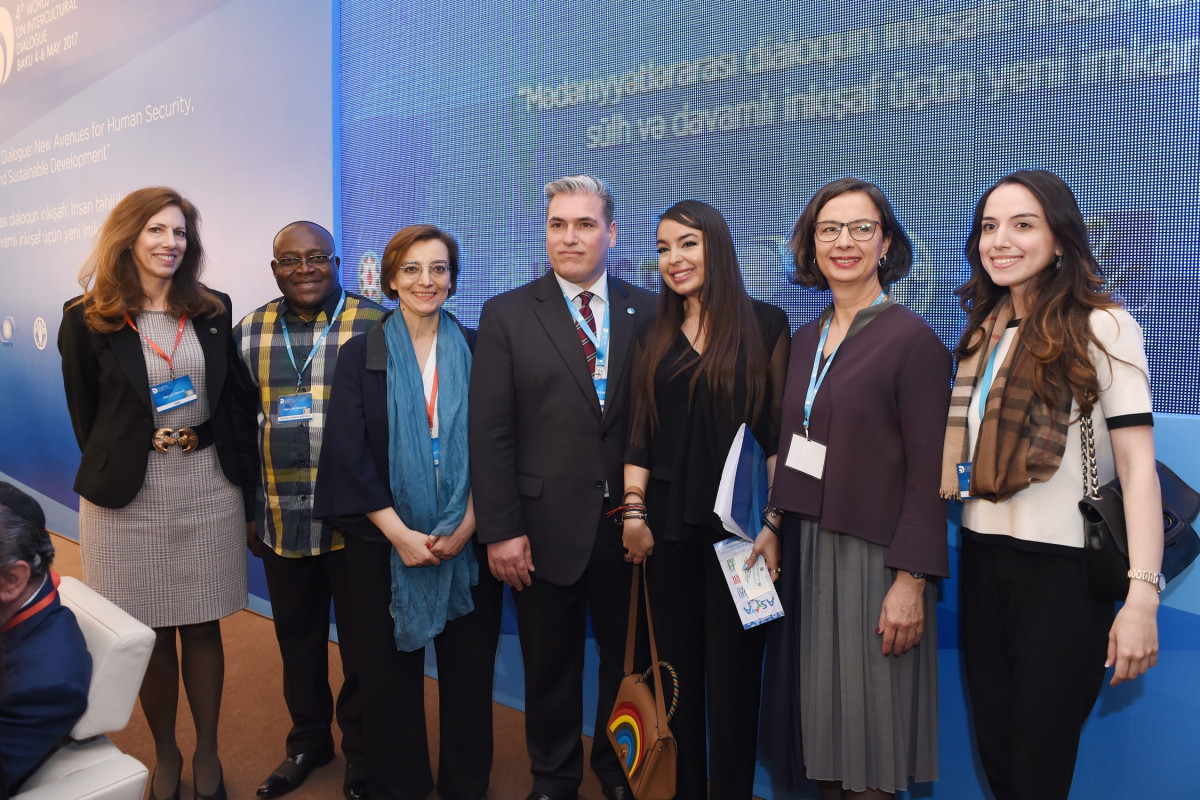
The session was attended by FAO Goodwill Ambassador and Vice-President of the Heydar Aliyev Foundation, Leyla Aliyeva.
FAO Office of the Secretary-General Attaché and session moderator Rashad al-Khafaji emphasized that the session was dedicated to a very important topic for the modern world and expressed gratitude to the Azerbaijani leadership for the high-level organization of the IV Global Forum.
Then, Goodwill Ambassador Leyla Aliyeva addressed the session, saying:
“It is very gratifying that people from different parts of the world have gathered in Baku to discuss important issues related to the development of intercultural dialogue. Dialogue between cultures and peoples is a fundamental condition for peace and prosperity in the world. There is no acceptable alternative to this dialogue. The less dialogue and understanding we have among us, the more space there will be for enmity and ignorance. For centuries, Azerbaijan has been a place where different cultures, religions, and civilizations converge. Throughout history, all peoples in Azerbaijan—whether Muslims, Jews, or Christians—have lived together in peace. In fact, no one called this ‘intercultural dialogue.’ Such interactions were simply a part of daily life. That is why our native city, beautiful Baku, has now become one of the centers for intercultural dialogue. Baku has become a place where people of diverse origins from all over the planet come together to make the world more complete.
I am very pleased to speak at this plenary session, whose topic is very important for me as FAO Goodwill Ambassador and Environmental Envoy. Discussions on food security, which are directly linked to peace and sustainable development, make this event extremely important and necessary today. We all know that intercultural dialogue is a crucial counterforce against the global rise of racism and violence. Moreover, its scope includes not only promoting tolerance and coexistence but also taking other actions. Intercultural exchanges also require seeking new innovative ways to achieve our common goals.
The adoption of the 2030 Agenda for Sustainable Development was a significant event for the world population in its mission to ensure the well-being of people on our planet. It is no coincidence that the first two goals of the agenda are precisely aimed at eradicating poverty and hunger. By achieving these goals, which reflect a common stance, we can form peaceful, inclusive, and sustainable societies.
In fact, it is very disappointing that in the 21st century, 870 million people worldwide still suffer from hunger and malnutrition. This happens at a time when one-third of food and food products are globally discarded as waste. Climate change exacerbates this situation. At the same time, globalization in agriculture is characterized by indifference to biodiversity and traditional knowledge. Excessive interdependence and the acquisition of products have harmed our ecosystems. Historically, cultures and nations have established connections through their cuisines and culinary traditions. They preserve their traditions. Preserving this serves food security, peace, and sustainable development. Naturally, strengthening intercultural dialogue actually serves the dissemination and preservation of traditional agricultural knowledge. In other words, we must confidently combine our efforts so that our products are the products of our future. Naturally, the distribution of food is itself a form of intercultural dialogue. Because culinary culture is a means for people to come together, eliminate stereotypes, and understand different ways of life.
The time has come. The international community must direct its efforts towards improving food security and nutrition, intercultural dialogue, and well-being. In this regard, I welcome the event held in October at FAO headquarters, organized with the support of Azerbaijan, the UN Alliance of Civilizations, and other partners, on protecting interfaith cultural identity and diversity through food security. This event actually stems from the 'Baku process.' It will serve the dissemination of tolerance and the elimination of cultural differences through food.
Dear friends, no country or organization can address universal issues such as food security, environmental protection, and sustainable development alone. Dialogue is very important to implement the global development agenda. Keeping this in mind, in 2011 we established IDEA—Public Union for “International Dialogue for Environmental Protection.” Our goal is very simple. We want to become a public platform to ensure a more environmentally friendly, safer, and healthier future. Our motto is: ‘One Planet – One Future.’ Regarding the scope of IDEA’s projects, we work on education, awareness, combating waste, and sustainable development. Over the past five years, our young organization has achieved very good results. We have planted over five million trees across the country. Not only in our country but also in other countries. We have also protected deer from the threat of extinction. Several conservation projects have been implemented in this regard. We also carry out other projects, all stemming from our current initiatives, especially the revival of the Caucasian leopard and the bison in the Caucasus. At the same time, we take other steps in this context. Last year, IDEA launched a very important project for cleaning the Kura River delta in the Caspian Sea to protect sturgeon. The goal of this project is to increase fish stocks, improve water quality, and enhance the surrounding ecology. I would also like to note that a few weeks ago, we initiated the creation of orchards for low-income families in Azerbaijan. We are implementing this project together with FAO. Within this project, we plan to plant fruit trees in rural areas, which will provide a source of income for those families. I express my deep gratitude to FAO and particularly to Ms. Malek Chakmaka, Head of FAO Office in Azerbaijan, for this partnership and her efforts. Regardless of our religion, race, or traditions, we all live on the same planet. We have a common future. Ecology has no borders. Reality shows that today human activity and anthropogenic factors disrupt the laws of nature and bring great disasters. People must appreciate the value of the wealth they possess. In this regard, I want to quote the famous American director, producer, and author Tom Shoydak: ‘Nothing in nature takes more than it needs. The redwood does not take all the nutrients from the soil; it takes only what it needs to grow. The cheetah chasing a deer does not destroy it.’ People must also follow these laws of nature. Everyone’s lifestyle and habits affect the environment. We can make significant changes to protect our one planet. This ensures our sustainable development. Therefore, intercultural dialogue must always be promoted for food security and a sustainable society.
Dear guests, I am confident that during your few days in our country, you will get acquainted with our delicious foods, see our cultural monuments, and meet local people. I am sure this experience will further enhance your potential for diversity.
Being diverse and open to dialogue means building bridges of understanding among different groups. We can jointly reduce conflicts and tensions. Such bridges are not built in formal negotiations and meetings but are conditioned by behind-the-scenes work. Taking this into account, I invite you to always be open to dialogue.
I wish you happiness and health. Thank you very much.
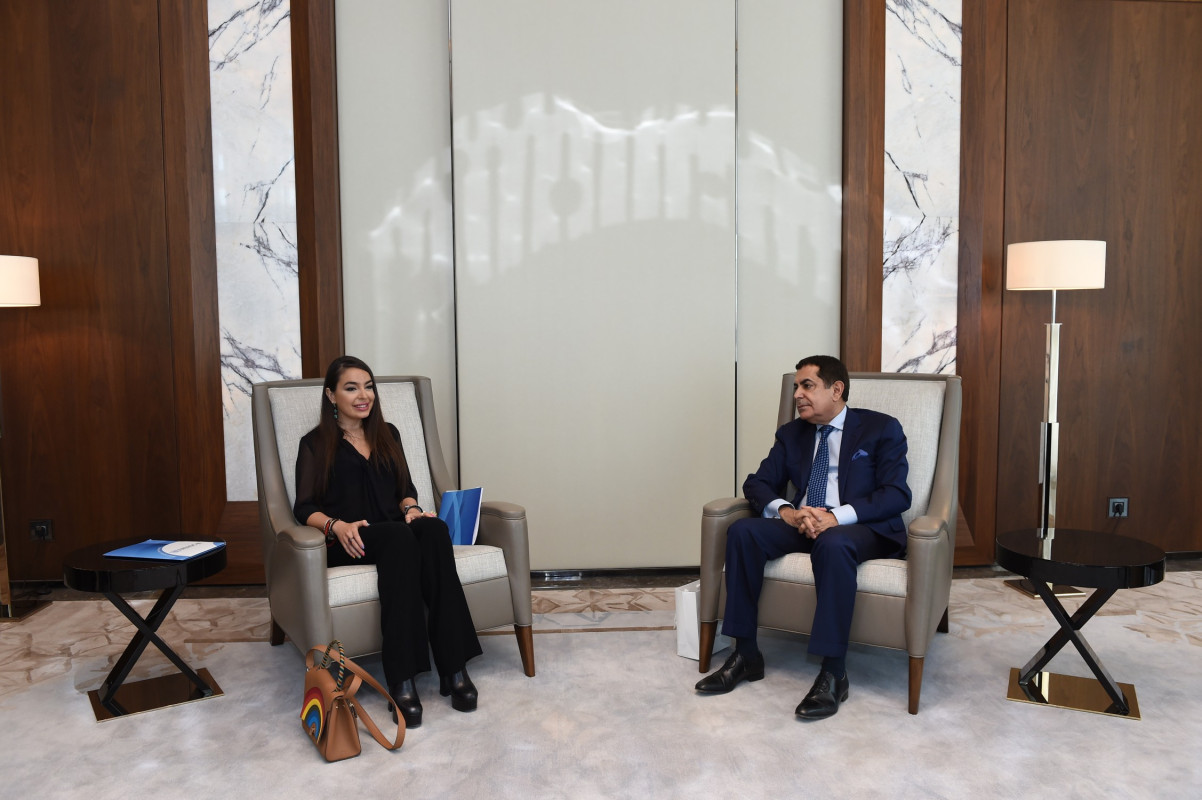
The UN Alliance of Civilizations High Representative Nassir Abdulaziz Al-Nasser highly appreciated the hospitality shown in Azerbaijan, stating that visitors to Baku would want to return to our capital. Noting that food is one of the priorities of the UN Alliance of Civilizations, Nassir Abdulaziz Al-Nasser mentioned cooperation with FAO on this issue. The UN official also touched on the problem of people facing hunger in different countries, emphasizing the relevance of food security for the world. Noting that intercultural dialogue is an important tool in ensuring food security, the High Representative said: “We are also concerned with human security. Food security stimulates commercial interests and the emergence of intercultural relations. Thousands of people die from hunger worldwide. Children in Yemen, Somalia, and Sudan suffer from hunger. By strengthening vulnerable communities, we can prevent food insecurity. If people from different cultures come together and share their experiences, we can achieve results.”
Azerbaijan’s Minister of Culture and Tourism, Abulfaz Garayev, stated that food, culinary arts, and nutrition are part of our daily life. “It is very positive that FAO participates in this Forum and that food security is considered on the same level as human security,” Garayev said, noting that poor-quality food products undermine human security. According to him, food, cuisine, traditions, climate, and environment are expressions of each nation. The Minister of Culture and Tourism emphasized that to enrich each other, it is not enough to read only the neighboring country’s book. Culinary arts and national cuisine are also important qualities of a nation. Garayev noted that a wide variety of foods are available in our country.
Marcela Villarreal, Director of the FAO Office of Partnerships, Advocacy, and Capacity Development, highly valued the representation of all FAO partners in the “Baku Process.” She noted that millions of people worldwide currently suffer from hunger, which is a problem related to food production and access. Highlighting future population growth, Villarreal stressed the need to increase food production by 60 percent. For this, participation in intercultural dialogue is crucial; people must exchange knowledge and share experiences.
During the session, FAO delivered a video message on food issues to Forum participants, emphasizing the importance of providing every man, woman, and child worldwide with necessary healthy food.
The session moderator, FAO Secretary-General’s Office Attaché Rashad al-Khafaji, spoke about the role of intercultural dialogue in ensuring food security and thanked FAO for participating in the “Baku Process.”
The session then continued with discussions.
Estrella Penunia, Secretary-General of the Asian Farmers Association for Sustainable Rural Development, highlighted the role of women in agricultural development.
Italian Parliament member Stella Bianki stated that, like other rights, the right to food security should exist.
Azerbaijan’s Minister of Culture and Tourism, Abulfaz Garayev, emphasized that food security is considered a strategic priority in the country, and special attention is given to agriculture.
Emil Gros Nakombo, Mayor of Bangui, the capital of the Central African Republic, stated that the topic of food security relates to all aspects of our lives and emphasized that progress in agriculture is possible worldwide. He said: “Ms. Leyla reminded us of the project for protecting deer. This is a very noble task. It would be wonderful to instill this in young people at schools.”
Marcela Villarreal addressed the issue of creating a land fund in Colombia.
Participants of the session conducted a broad exchange of views on the state of food security worldwide.